Are we just making Pretty shapes?

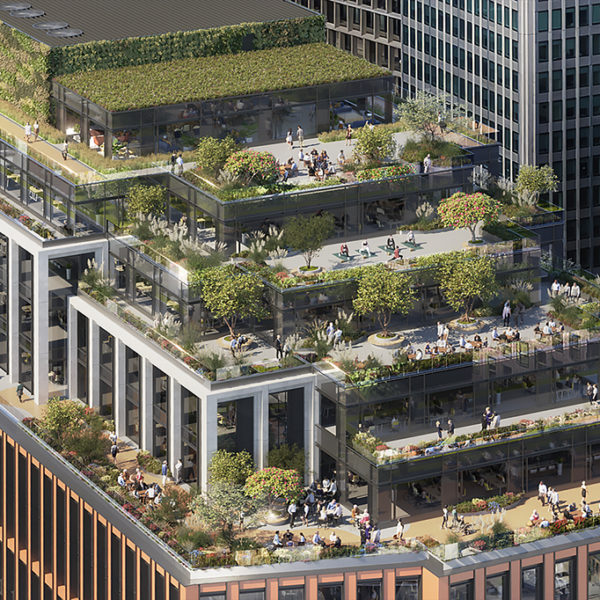
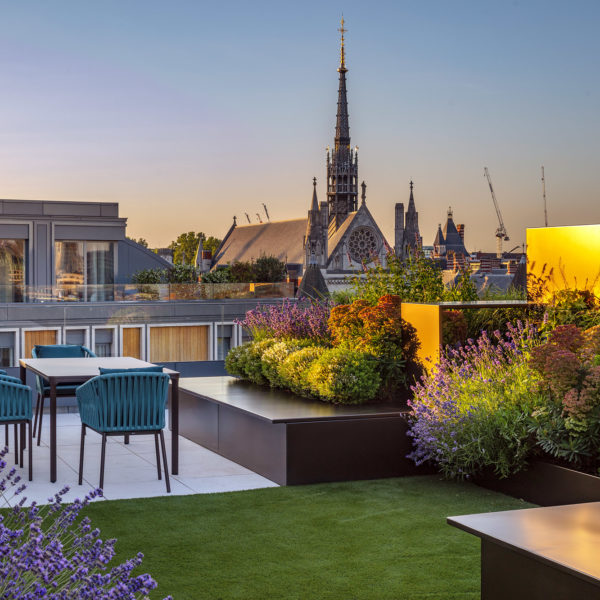
Strong forms can be a good thing and geometry need not be all right angles - but do we sometimes let shapes drive the design rather than vice versa? See www.Bowleswyer.co.uk/garden-landscape-design-london-cotswold/3/3/27 for more details on this project.

One of the things that sets garden design apart from landscape design in general is the greater emphasis on form. And I am a big believer in form, especially in the strong geometry that underlines strong forms in design. By ‘underlying geometry’ I wouldn’t want anyone to think that I am referring merely to some Orthographic strict approach. It is just that in the constricted spaces that are most gardens, the elements work better if they have some underlying relationship with each other. This relationship is essentially a geometric one, although it may frequently be based on curves or odd angles. However, the over reliance on this sort of geometrical approach is dangerous. It stifles creativity and leads to a ‘sameness’ in designs from site to site.

Figs 2-117 'Circles on circles theme' and 2-118 'Circles and radii theme' from Grant Reid's 'From Concept to Form in Landscape Design' (2nd Edition)

This was very well summed up recently in an article by Tim Waterman on the landscape Institute website: “Begin with a circle (or a hexagon, or even an irregular polygon), click and place it around in CAD a bit, and presto, a garden design that functions only in plan and which stylistically evokes the golden year of 1985.” 

I always think of a design for a site being based on a triangular set of influences – site, client and designer (probably in that order of importance). This is not always an equilateral triangle in the sense that sometimes one of the three influences may exert more or less pressure. You can tell the designers who exert a strong influence on their designs and ignore the other two – their schemes all look pretty similar – ‘a very strong house style’ is how it is often described. The one advantage to clients is at least they know what they are going to get, although there is little of their own character in the finished design. My real problem with this is that it not only ignores the client (although some clients seem OK with that) but it also ignores the unique properties of the site – see my previous blog on this subject – ‘Why are Landscape Designers different?’  http://www.bowleswyer.co.uk/blog/?p=142. Of course, that doesn’t stop most of us becoming obsessed with form and ‘shape-making’, myself included on some occasions. And strong forms are the most obvious and instant manifestation of a strong sense of design. They add the wow-factor and are quickly and easily digestible. That doesn’t mean they are good design per se, just that they get the design noticed.

Posted in Garden Design | Tagged , , , , , , , , | Leave a comment

Stop, Collaborate & Listen!

 As designers there are times when we become fully absorbed in our own work, and rightly so.  This happens frequently when projects are running at full tilt and we barely have time to sip that treasured early morning coffee, let alone pause for contemplation.

Ummm!

Whether you work in a small studio or large office it is important to take a step back to review work when the opportunities arise.  More often than not constructive criticism from our office colleagues encourages us to look again and consider alternatives available.  This often leads to better design development and the results are often more successful.   

Can we rely on our colleagues too much though?  There can be a danger that the criticism we receive becomes diluted or even too friendly if we are not careful.  This is where collaboration with other external professionals can be useful from time to time to refresh creativity. 

Elephant & Castle

Recently at Bowles & Wyer we were involved in a public realm design tender for an exciting regeneration project around the St Mary’s site at Elephant & Castle.  Lend Lease and Southwark council are working in partnership to transform this site as part of an overall £1.5bn, 55 acre development programme.  We were shortlisted down to the final two designers but sadly we were not awarded the final contract despite our best efforts.  The experience however proved beneficial.  

Jeremy Rye Studio were initially invited to tender by Lend Lease and approached us to work in collaboration with them.  Jeremy Rye worked previously for Kim Wilkie, recently setting up his own practice in 2011.  His key strengths lie in masterplanning and sustainable design and he felt this would complement  our own experience in detailed design of urban spaces, roof gardens and high quality residential developments. 

Brooks Drive Extension Concept

It quickly became apparent from our first meeting that we had similar ideas and values, helping us form a strong bond.  We made sure we communicated regularly and most importantly gave un-bias ‘outsider’ criticism of each other’s ideas.  The result was a robust response to the design brief and we were left convinced our ideas had the potential to be successful. 

Concept Masterplan

Criticism from fellow landscape practitioners is not something we all have the luxury of during design stages of projects but something that can prove useful with the right team of people.   Results can be surprising with exciting outcomes often different to those produced in isolation.  Maybe we should all consider the benefits of collaboration once and a while to challenge our thinking?  Certainly in tough economic times it is no bad thing to have allies closer to home.

James Smith

Posted in Landscape Architecture, Philosophy and ethics | Tagged , , , , , , | Leave a comment

Where have all the trees gone?

This is from a developer's sale details - not a tree in sight!

Why is it that most house-builders are so against planting trees? In fact, why are they generally against putting landscape in place? This question lurked behind (and occasionally in the foreground) of many of the recent discussions in the Landscape Institute lecture series staged at the excellent Garden Museum in Lambeth, London (www.gardenmuseum.org.uk). Historically, those schemes that have incorporated a high quality integrated landscape have become highly valued, both in market terms but also in wider social terms. Many of these were in their day landmarks in the way in which housing was built on mass – The Garden City movement, Span Developments, Wates housing estates from the 1960s to name but a few.

Span Houses at Cedar Chase - designed by Eric Lyons

One of the common threads in all of these was their incorporation of dense planting and trees into the structure of the developments. Often they were planned at relatively high housing densities, allowing higher returns for the developer.

As land prices have moved up and car ownership increased, developers tended to move more towards apartment block schemes in urban areas. The more imaginative operators (such as Urban Splash) and those working at the top end of the market would always incorporate landscape. Sadly, this was a minority. Our experience working in this market has clearly shown that fantastic results can be squeezed form the most difficult sites when Landscape Architects or Garden Designers are involved early enough. Bowles & Wyer recently picked up the ‘Landscape Architect of the Year’ and ‘Garden Designer of the Year’ awards at the New Homes Garden Awards (www.newhomesgardenawards.co.uk). This has been run by Denis Rawlings and David Hoppit for several years to try and drive forward the quality of landscape design in housing.

Squeeze those trees in! A scheme of ours in London.

One of our schemes won ‘Best Urban Landscape’ on a very tight site in London. It just shows that there is never an excuse not to plant trees. On this site, they are squeezed between the houses and the backs of the neighbouring shops, on top of an underground car park! you can see more of this scheme on our website in the project pages: The Collection, St Johns Wood. The interesting thing about it is that the cost of the soft landscape was only about £70,000, which represents just £5000 per house. I would hazard a guess that it added a lot more than that to the sale price of each unit.

Posted in Garden Design, Landscape Architecture, Planning | Tagged , , , , , , , , , , , , , | Leave a comment

Should garden designers take commission payments?

Loadsamoney! - Commission? or corruption?

We were recently offered a commission payment by a firm that designed and built treehouses. We were recommending them on a large garden we are undertaking in Surrey. We did not take up the offer. Interestingly, shortly afterwards they put us forward for another job in the same neighbourhood and demanded a commission payment if we were appointed. We refused, saying that payment should be unnecessary. This resulted in quite a row between us.

We were against taking the payment on a number of different grounds. Firstly, it clouds your judgement. I want to be free to make decisions on a number of criteria, without the ‘size of the bung’ being one of the factors. Secondly, we should be free to recommend others (and be recommended ourselves) on the basis of competency, skills and experience. We work with a range of other experts and specialists – joiners, artists, lighting designers, etc. we choose them on merit. Finally (and most importantly) it is essentially dishonest. Not dishonest in the sense of illegal, but more in the sense of not being transparent. If you take such payments, do you tell your client? If not, why would that be? In other industries (such as the insurance industry), we all rail against similar opaque practices, calling them shady, dishonest or even corrupt. When it is us being offered the money it is a slightly different story. We either defend it saying it is an honestly earned commission, or keep quiet and take the money (which is what I suspect most people do). Even if one decides to take a stance on this, it is very difficult not to acquiesce when a supplier effectively gives you the money unbidden by inviting you to invoice them, as happened to us recently. Perhaps weakly, I didn’t invoice them, but I didn’t tell them I wouldn’t take the money either (although I won’t). I am not saying we haven’t accepted it once or twice in the past, but we have made a joint decision in the business to draw a line here.

In any case, most if not all professional associations frown upon the idea: it is strictly forbidden by the code of professional conduct of both the Landscape Institute and the Society of Garden Designers. I suspect that this does not stop the practice going on however. I also realise that I will probably unleash a flood of posts from other designers saying that this is the only way they can make a decent living; that it is alright for you lot in the SE etc. etc. My answer to that is that you should charge more. Again – ‘Alright for you lot in the loaded South-East’. But if you don’t try and charge a living wage for what you do, how will clients ever learn to value it? What clients pay for should be transparent and fair – to both sides.

Posted in Garden Design, Philosophy and ethics | Tagged , , , | 3 Comments

Small acts can make big changes

I went to a funeral yesterday of a friend who had spent most of his too-short life campaigning on environmental and other issues. It seemed a cold, bleak moment as we stood by the graveside on the snow-covered ground. But then, something amazing happened. Brightly coloured bio-degradable balloons we handed around. We learned that each had been filled with a few wildflower seeds before they had been inflated. After a few words and a moment’s silence, all the balloons were released simultaneously into the winter sky. It was a beautiful moment as we all stood, each wrapped in our own thoughts, watching the balloons floating away.

I was profoundly struck by this. As always at such events, one is sharply reminded of the mortality that we all share and of how much for granted we take vitality. It also offered an opportunity to re-assess priorities and goals. Even in his last act, this deeply committed individual was striving to bring about change. The wildflower seeds were of course a quite literal interpretation of the parable of the seed sowing – those which fall on fertile ground would grow. But they were also a wonderful metaphor. Sometimes the best way to bring about change is not grand gestures, but small acts. We never know what effect each small act of change may be. A letter here or an email there; a name on a petition, a face at a meeting: some of these will fall on stony ground, but others may take root.

Posted in Philosophy and ethics | Tagged , , | Leave a comment

Why are Landscape designers different?

Landscape and Garden design are different from other forms of design. Why? Well, there are two reasons; firstly because we design with living things. This means our designs change with time. They are not ephemeral in the usual sense of the word, tending instead to improve with time. However, the other reason we are different is that we are always site-specific. This is sometimes true for other professions (architecture for example), but always true for landscape design. Sometimes I think that we do not sufficiently realise what a rare opportunity this represents.

A few months ago, we looked at a site in the Gade Valley in Hertfordshire. We already have other projects in this valley, notably at a grade II* listed manorial house called Gaddesden Hall. The new plot we were looking at was different because it was a greenfield site where the client was planning an application under PPS7, which allows new houses to be built in the countryside if they are of exceptional architectural quality. 

This new site really got me thinking about what it meant to be site specific in terms of design, and also how that related to the client. I suppose what defined it was not so much the views (which were fantastic) or the approach through the tree-covered lane, which I also really liked, but the way the site connected to the broader landscape. One of the things that I learned from working at Gaddesden Hall is that the Gade Valley has a rich history going back at least a couple thousand years, and probably longer. That is why the approach through the little lane overhung with trees was so important, because the feeling one gets walking up the track is of stepping backwards to something forgotten.

In landscape terms this would mean that our approach would not be to create a ‘garden’ as such. Neither would it be to try and ‘hide’ the house. In any case, in order to succeed the architect’s design would have to strike chords with its surroundings. In the simplest terms we would be looking at integration, but this works at a more fundamental level than a cosmetic or visual approach.

When we were standing on the site, I remarked to the client that although we were surrounded by classic English ‘countryside’, everything that we could see around us was a ‘manmade’ landscape. In effect of course this means a balance between human activity and natural forces. Ultimately any landscape that we would create would be the same – it would seek equilibrium between human activity and nature. How this will look depends partly on the activity – lawn, vegetable gardens, orchards, pasture, hedgerows, woodland and reedbeds all occupy different positions in the tapestry of the broader landscape and represent varying inputs of activity.

 The skill would be to weave different elements (however few or many they may be) together into a whole that feels right, that feels as though it has always been there. It will be neither a pure expression of the site any more than it will be a pure distillation of who the client is (or the designer for that matter), but a manifestation of how we interact with the land, how we live in the place. In this way it will not only be unique but will change with time as our circumstances change and with every decision that we make.

Posted in Countryside, Garden Design, Landscape Architecture, Philosophy and ethics | Tagged , , , , , , | Leave a comment

We all like to make plans…

Cogs in the system

Does the planning system need reform, and if so, how?

The Government’s proposals to reform the planning system (the National Planning Policy Framework or NPPF, in tandem with the Localism Bill) could have far-reaching effects on the local environment – indeed that is the intention. Quite how it will play out in practice is another matter. The cross-party Communities and Local Government Select Committee (CLG) published its review of the NPPF yesterday – and its response was not entirely supportive. Interestingly, the CLG review picked up on a number of issues that have been worrying landscape architects and local activists. Two things in particular have been a common thread amongst commentators. The first of these was the haziness around the term ‘sustainability’ in the NPPF. Exactly what the government means by sustainability in this context is unclear, detractors would say deliberately so.

"Sustainability can mean whatever you want it to..."

To paraphrase Humpty Dumpty, "Sustainability can mean whatever you want it to..."

It is important, because one of the other key planks of the framework is its much vaunted ‘presumption in favour of [sustainable] development’. I put the word in brackets because many campaigners point out that without a clear definition of sustainability, the framework becomes a developers’ charter – the second important issue picked up by the CLG review. In fact, the CLG review went further than this, suggesting that the default answer of ‘yes’ to development should be removed, to create a balance between economic development and protecting the environment and communities. Perhaps the importance of this point is best viewed from a regional perspective, for it is in the most densely occupied parts of the UK that the questions come into sharpest focus. In the over-developed south-east, the potential financial returns are greatest. This means that if a developer can get planning consent on a previously agricultural plot of land, the value will rise something like a hundred-fold.

Lots of this?
With a significant under-supply in housing, many would argue that a review of the planning system is long overdue. The question is: how to loosen up the process without weakening the protections already in place?

In addition to this, the most densely developed areas are also those where demand is strongest for houses and other development pressures (transport, offices etc). These are very real pressures which ultimately affect house prices and therefore the ability of those on low or middle incomes to find somewhere to live.

In addition to the NPPF, there is the Localism Bill (now law). One of the key strands of this legislation is to allow communities to directly drive the local planning agenda. At the moment, this is essentially either done through the ballot box – some would argue unsuccessfully, through consultation (non-binding in legal terms), or through local community and special interest groups. This latter is expected to continue, but the intention is that local communities will be able to directly influence the planning agenda and indeed the local framework. The drawback that I see with this is that on the whole, people only campaign on negative issues – to stop development – rather than on positive issues. There is no denying that there is a strong thread of ‘nimbyism’ running through community involvement in planning. The danger is that this could become embedded in local framework plans. This could actually work against the ‘presumption in favour of development’. However, far from being a check to this as intended by the Government, it is likely that it would be resolved in challenges by developers to the planning policies and framework plans of planning authorities.

So the question remains, will the changes to the planning system result in more or less democracy? In addition will it increase appeals by developers, thus lengthening and complicating the process – the exact opposite of what is intended?

Posted in Countryside, Landscape Architecture, Planning | Tagged , , , , , | Leave a comment

Should designers stick to designing?

I attended a BALI designer forum recently, which was intended not only as a networking session for BALI registered designer members, but also as a joint session between designers and contractors to talk through shared issues and to find common ground. It was entitled ‘Designers in a contractors’ world – a foot in both camps’. Ironically, this rather accurately describes Bowles & Wyer, so I was there not quite sure which hat I was supposed to have on. It was an interesting day. Quite early on, there was a list of ‘pet gripes’ that had been gleaned from designers about contractors and vice-versa. These were fairly predictable, although there were a couple of classics, such as: “why do you keep putting specification clauses in that you copied from a college spec , that have no relevance to this job?” (from a contractor); or “please read the documents I send you” (from a designer).
Following a breakout session, we came back together to discuss the roles of designers and contractors. There was a brisk discussion around the issue of designers supplying plants. This was partly sparked by one of the contractors’ comments that we had seen earlier. Pat Fox noted that when he was asked about this issue, Andrew Wilson had opined that ‘Garden designers should stick to garden design’. She was of a different opinion, that if there was an element of profit in the supply of plants, then why shouldn’t garden designers be entitled to that?
My own view is that in principle, Andrew is right – garden designers should stick to garden design; if they are struggling to make that pay then they should be charging more. I realise that in the fairly rarefied atmosphere of the upper end of the London and South east market (that I largely work in) it is easy to talk about this with the luxury of choice and that for many this may be the only way that they can survive. David Robinson put forward a spirited and well-argued view on exactly that point, saying that in the market that he worked (largely the West Midlands) the fees were not on their own enough to support a garden designer and that plant sales were a necessary part of the business model.
Of course, I am also aware that many people will take my saying ‘Garden designers should stick to garden design’ as hypocritical in the extreme, because I am engaged in contracting and design build. My point here is that it is better to strike a clear position rather than cherrypick the bits that suit you. Although this allows higher profit levels, I see a number of disadvantages. First off I think it offers clients a confusing situation. Either a separation of design and construction, or one organisation doing them all – these are very clear positions, with little left to chance. Secondly (and linked) is the matter of liability envelope. If a plant is supplied by the designer to the client, but the delivery is taken and the plant is planted by the contractor, then it is not exactly clear who takes responsibility if something goes wrong. Of course, if the designer takes full responsibility then this is not a problem, particularly if he/she also plants the stock. However, in my experience this has not been the case. Often designers want to select and take the profit on plants without the responsibility. Because contractors (like designers) work on a tight margin, in reality the contractor is likely to price in some attendances and loss of profit into the job, so the client will end up paying more in any case. Which perhaps argues the point that they should be paying realistic (i.e. higher) fees in the first place?

Posted in Contracting, Garden Design, Philosophy and ethics | Tagged , , , | Leave a comment

The kid in all of us

I had a refreshing meeting with a client the other day and it was the last thing I expected. The client was a Russian businessman and his family; the location was a very exclusive private estate in Surrey. We have been involved in the project for a little while now, but this was the first meeting that we were presenting serious proposals. The first surprise was that top of their list on the brief was a decent sized vegetable garden. We had anticipated this and incorporated a quaint potager and fruit garden.


When we were going through the plans there was a lot of discussion (in Russian) before he turned back to me and said ‘This is fine for a few vegetables, but it is much too small – at the moment my mother in law looks after a kitchen garden of about 600m2 – where is she going to grow her potatoes?’Although I have quite a large vegetable garden at home, I was not used to this from most of my clients, and it was an interesting change. From there the discussion moved on to the play equipment for their three young children. ‘This looks a bit tame’ he remarked, ‘Can we have something a bit more adventurous? Also, will this trampoline take adults?’

I must confess that I never thought I would hear one of my clients say ‘Will this trampoline take adults?’ It just goes to show that you should never make too many suppositions or pre-conceptions about people. This was a client who despite all his wealth, clearly had his priorities straight! Nothing like a quick bounce on the trampoline after a hard day in the veg garden, I always find…

Posted in Garden Design | Tagged , , , | Leave a comment

Hamamelis mollis

I was reminded of this plant recently when visiting a garden in Surrey. I bring it to your attention simply because I always think of it in terms of a shrub growing to about 2m or so. These were two beautiful specimens, each about 7-8m tall.

Not only that but they had unusually graceful, twisted stems and a low-branching form that most designers would kill for. They were tucked away in the corner of a somewhat overrun garden in Surrey. What attracted me initially was the pale haze of the flowers visible from some distance away.

At first I thought it was a Corylopsis pauciflora, it was only when I got closer that I noticed the familiar pale thread-like petals and the delicate fragrance, discernible even on a damp, cold, January day. A real delight and certainly a plant that will find its way back on to my ‘must use’ lists.

Posted in Garden Design, Plants | Tagged , , | Leave a comment